For anyone with acne-prone skin, the idea of applying moisturizer can feel counterintuitive, even scary. The fear is understandable: why would you add more moisture to skin that already feels oily or is covered in breakouts? It’s a common myth that drying out your skin is the best way to fight acne, but in reality, the opposite is true. A good moisturizer is one of the most important steps in your routine—as long as you choose the right one. This is where finding the best non-comedogenic moisturizer becomes your most important mission
At VivantBeauty, we believe in demystifying skincare. This guide will explain exactly what “non-comedogenic” means, why it’s non-negotiable for blemish-prone skin, and help you find the **best non-comedogenic moisturizer** to keep your skin hydrated, balanced, and clear.
Why Moisturizing is a Must for Acne-Prone Skin
Many of the most effective acne-fighting ingredients are designed to exfoliate and reduce oil, which can be very drying. Actives like those we discussed in our Salicylic Acid vs. Benzoyl Peroxide guide work wonders on breakouts, but they can also compromise your skin’s protective barrier.
When your skin barrier is dry and irritated, two things happen:
- It gets inflamed. Inflammation is a key component of acne, so an irritated barrier can make your existing breakouts look redder and more painful.
- It can produce more oil. In an attempt to compensate for the dryness, your skin can actually go into overdrive, producing even more sebum and leading to more clogged pores.
A good **moisturizer for acne-prone skin** solves this problem by hydrating the skin, soothing irritation, and supporting the skin barrier, which allows your active treatments to work more effectively.
What Does “Non-Comedogenic” Actually Mean?
This is the most important term to look for on a product label. Let’s break it down simply:
- A “comedo” (plural: “comedones”) is the medical term for a clogged pore, like a blackhead or a whitehead.
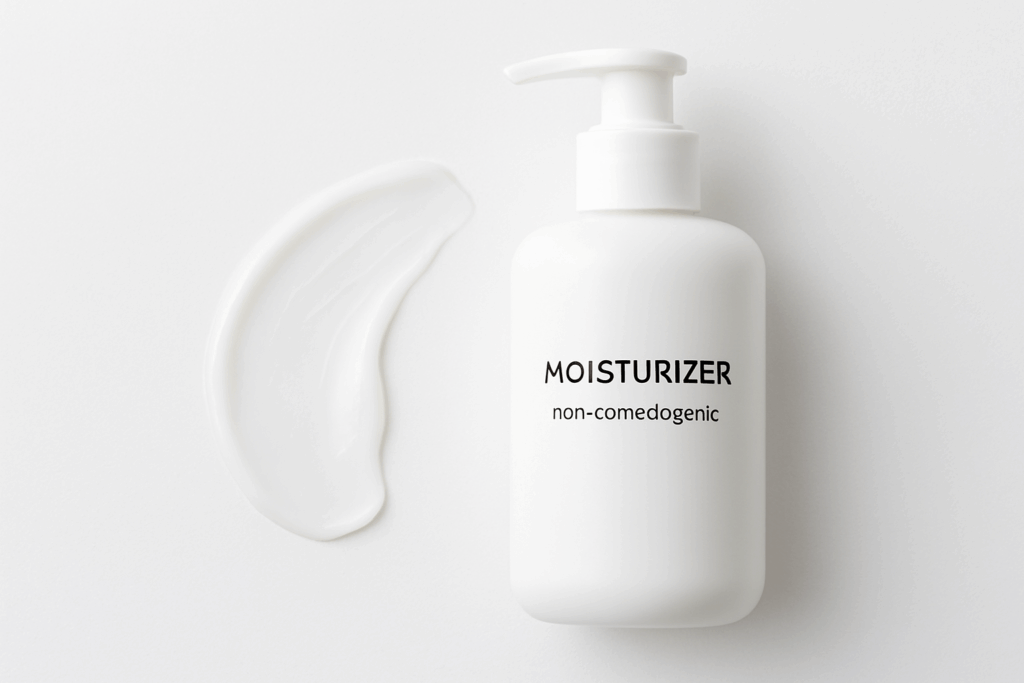
- Therefore, **”non-comedogenic”** means a product has been specifically formulated with ingredients that are not likely to cause pore blockages and trigger acne.
While the term isn’t strictly regulated by the FDA, as the American Academy of Dermatology (AAD) notes, it is an extremely helpful guideline for consumers. It signals that the manufacturer has intentionally chosen ingredients that are known to be safe for acne-prone skin.
What to Look For in the Best Non-Comedogenic Moisturizer
The best non-comedogenic moisturizers are typically lightweight and packed with ingredients that hydrate and soothe without adding heaviness or clogging pores.
- Hyaluronic Acid: A superstar humectant that can hold up to 1,000 times its weight in water. It provides intense hydration without feeling oily or heavy.
- Niacinamide (Vitamin B3): This is a fantastic multi-tasking ingredient for acne. It helps to calm redness and inflammation, regulate oil production, and strengthen the skin’s barrier.
- Ceramides: These are lipids that are naturally found in your skin and are essential for a healthy barrier. Adding them back via a moisturizer helps to repair any damage caused by harsh acne treatments.
- Glycerin: A simple but highly effective humectant that draws moisture from the air into your skin, keeping it hydrated and soft.
Ingredients to Avoid: Be cautious with products containing heavy oils (like coconut oil or cocoa butter), added fragrances, and high concentrations of alcohol, as these can be irritating or pore-clogging for sensitive, acne-prone skin.
Finding the Right Formula for Your Skin Type
“Non-comedogenic” can apply to different textures. The best one for you depends on how oily or dry your skin is.
- For Oily Skin: Look for a **gel or gel-cream** moisturizer. These are water-based, lightweight, and absorb instantly, providing hydration without any greasy feeling.
- For Combination Skin: A **lightweight lotion** is often the perfect balance. It provides enough moisture for drier areas without overwhelming the oilier T-zone.
- For Dry, Acne-Prone Skin: If you’re using strong treatments like prescription retinoids, you may need a richer **barrier repair cream**. Look for formulas packed with ceramides and niacinamide that are still labeled non-comedogenic.
Remember, finding the perfect moisturizer is a key step in any successful acne treatment plan. It supports your skin’s health, reduces irritation, and ultimately helps you get the clear complexion you’re working towards. For a complete overview, be sure to read our Complete Guide to Managing and Treating Adult Acne.
Frequently Asked Questions (FAQs)
Q1: Is “oil-free” the same as “non-comedogenic”?
A: Not exactly, though they often overlap. A product can be “oil-free” but still contain other pore-clogging ingredients. Conversely, some plant-based oils (like squalane or jojoba oil) are actually non-comedogenic. However, for very oily skin types, choosing an “oil-free” product is often a safe and easy starting point.
Q2: How do I know if a new moisturizer is breaking me out?
A: The golden rule is to introduce only one new product at a time. Use the new moisturizer for at least 2-3 weeks before adding anything else to your routine. If you notice an increase in clogged pores or breakouts during that time, the new product may be the culprit.
Q3: Can I just use a hydrating serum instead of a moisturizer?
A: While a hydrating serum (like one with hyaluronic acid) is a great addition, it doesn’t replace a moisturizer. A serum’s job is to deliver a high concentration of specific ingredients deep into the skin. A moisturizer’s job is to form a protective layer on the surface to lock in that hydration and protect your skin barrier. It’s best to use both.