If you’ve started exploring anti-aging skincare, you’ve likely heard of the superstars: retinol and vitamin C. But there’s another class of powerhouse ingredients working quietly behind the scenes that deserves your full attention: peptides. Often hailed as the unsung heroes of skincare, peptides for wrinkles and skin firming are gentle, effective, and incredibly versatile. They are a crucial component in any serious routine focused on maintaining a youthful complexion.
Unlike some more aggressive ingredients, peptides work in harmony with your skin, acting as tiny messengers to trigger powerful regenerative processes. At VivantBeauty, we believe in smart skincare, and understanding the best peptides for skin is a game-changer. Let’s decode these potent molecules and reveal the top 5 you should look for.
How Do Peptides Work for Your Skin?
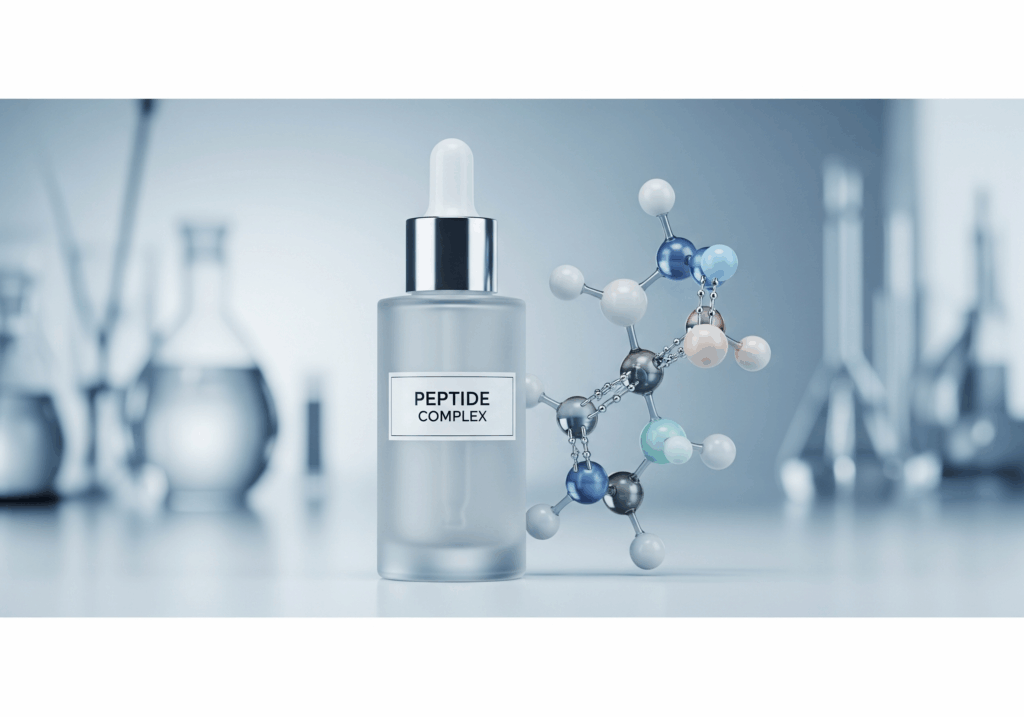
Before we dive into the list, it’s helpful to understand the basics of how do peptides work. In simple terms, peptides are short chains of amino acids, which are the fundamental building blocks of proteins. The most important proteins in your skin are collagen and elastin—the very things that give your skin its structure, firmness, and elasticity.
Think of peptides as tiny, biological text messages. When applied to your skin, different peptides send specific signals to your skin cells. One peptide might send a message that says, “Make more collagen!” Another might say, “Slow down the breakdown of existing collagen!” As this scientific review on peptides in cosmetics confirms, their primary role is to modulate cell activity, helping your skin function more like it did when it was younger.
The 5 Best Types of Peptides for Your Skin
Not all peptides are created equal. They are categorized based on the “message” they send. Here are the top 5 types you’ll find in the most effective skincare products.
1. Signal Peptides
These are the most common type of peptides in skincare, and for good reason. Signal peptides send a message to your skin’s fibroblasts (the cells that create collagen) to ramp up production. They are your go-to for improving overall skin firmness and reducing the appearance of wrinkles over time.
Look for on the label: Palmitoyl Tripeptide-5, Palmitoyl Tetrapeptide-7 (often found in the popular Matrixyl 3000 complex), Palmitoyl Tripeptide-1.
2. Carrier Peptides
Carrier peptides work by stabilizing and delivering crucial trace elements, like copper and manganese, to the skin. These elements are essential for processes like collagen synthesis and wound healing. Copper peptides, in particular, are well-regarded for their ability to improve skin clarity, firmness, and reduce inflammation.
Look for on the label: Copper Tripeptide-1 (often listed as GHK-Cu or Copper Peptides).
3. Neurotransmitter-Inhibiting Peptides
Often dubbed “Botox in a bottle,” these clever peptides are designed to inhibit the pathways that cause muscle contractions. While they aren’t nearly as dramatic as an injection, they can help to soften the look of dynamic wrinkles—the lines formed by repeated facial expressions, like crow’s feet and forehead lines. This makes them a fantastic choice for targeted treatments.
Look for on the label: Acetyl Hexapeptide-8 (Argireline), Pentapeptide-18.
4. Enzyme-Inhibiting Peptides
While some peptides work to build new collagen, this group works to preserve the collagen you already have. They function by inhibiting the enzymes (like MMPs – matrix metalloproteinases) that naturally break down collagen as we age. By slowing down this degradation process, they help maintain your skin’s firmness and prevent premature sagging.
Look for on the label: Trifluoroacetyl Tripeptide-2 (often found in Trylagen), soybean peptides (Glycine Soja).
5. Structural Peptides
This category includes peptides that have a more direct effect on a specific part of the skin’s structure or function. A well-known example is their use in eye creams to target puffiness. They can work by improving lymphatic circulation to reduce the fluid buildup that causes bags under the eyes.
Look for on the label: Dipeptide-2, Acetyl Tetrapeptide-5.
Best Peptide Serums: Top Picks for Every Budget
1. The Ordinary “Buffet” Multi-Peptide Serum
- Price: $17
- Key Peptides: Matrixyl 3000, Argireline, copper peptides
- Where to Buy: Sephora, Ulta, The Ordinary website
- Best For: Budget option with multiple peptide types
2. The Inkey List Collagen Peptide Serum
- Price: $15
- Key Peptides: Matrixyl 3000 complex
- Where to Buy: Sephora, Ulta
- Best For: Affordable collagen-boosting serum
3. Paula’s Choice Peptide Booster
- Price: $52
- Key Peptides: Eight different peptides
- Where to Buy: Paula’s Choice website, Amazon
- Best For: Mid-range, mature skin
4. SkinCeuticals A.G.E. Interrupter Advanced
- Price: $162
- Key Peptides: Peptide complex + glycyrrhetinic acid
- Where to Buy: Dermstore, SkinCeuticals authorized retailers
- Best For: Luxury option, deep wrinkles
5. Drunk Elephant Protini Polypeptide Cream
- Price: $74
- Key Peptides: Signal peptides + growth factors
- Where to Buy: Sephora, Drunk Elephant website
- Best For: Premium moisturizer with peptides
How to Incorporate Peptides into Your Skincare Routine
The beauty of peptides is that they are generally very well-tolerated by all skin types and are easy to add to your routine. You’ll most often find them in serums, but they are also common in moisturizers and eye creams.
They can be used in both your morning and evening routine. In the evening, they work wonderfully alongside other powerful ingredients. For instance, peptides can help support the skin barrier, making them an excellent partner for a vitamin A derivative. You can learn more about how to start with that in our Retinol for Beginners guide. To see how peptides fit into a complete anti-aging strategy, be sure to check out our Ultimate Guide to an Anti-Aging Skincare Routine.
Frequently Asked Questions (FAQs)
Q1: Can I use peptides with Vitamin C and Retinol?
A: Yes! Peptides are very collaborative. They can be used in the same routine as Vitamin C (in the morning) and Retinol (at night). Some people prefer to alternate, but they do not deactivate each other.
Q2: How long does it take to see results from peptides?
A: As with any ingredient that works by stimulating collagen, patience is key. While you might notice some initial improvements in hydration, visible changes in firmness and wrinkles typically take at least 4-12 weeks of consistent use.
Q3: Are peptides better than retinol?
A: They aren’t better or worse; they are different. Retinol works primarily by accelerating cell turnover, while peptides work by sending specific signals. They are a perfect team! Retinol is the powerful coach, and peptides are the skilled support players.