Navigating the beauty aisle can often feel like a chemistry lesson you never signed up for. But amidst the complex formulas and high-tech treatments, there’s a growing movement back to the basics. More and more, people are seeking a simpler, more transparent approach to beauty, rooted in the power of nature. This is the heart of the natural skincare philosophy: using ingredients that are close to their original source to nourish and support the skin’s own healing abilities. This ultimate guide to natural skincare will be your starting point for a cleaner, more intuitive routine.
At VivantBeauty, we believe that effective skincare can be both gentle and powerful. Whether you’re looking to “clean up” your current routine or explore the fun of **DIY skincare recipes**, this guide will walk you through the core principles, the best ingredients, and how to get started on your journey to a naturally radiant complexion.
What are the Benefits of Natural Skincare?
Switching to a more natural routine isn’t just a trend; it’s a conscious choice to work in harmony with your skin. The core philosophy aligns perfectly with the principles of our Holistic Beauty Guide, focusing on nurturing the body from the inside and out.
- Gentler on the Skin: Natural ingredients are often better tolerated by sensitive skin types, as they are typically free from harsh synthetic fragrances, dyes, and preservatives that can cause irritation.
- Rich in Nutrients: Plant-based oils, butters, and extracts are packed with vitamins, antioxidants, and essential fatty acids that feed and protect the skin. As this scientific review from the NIH highlights, botanical ingredients have a vast range of beneficial properties for skin health.
- Environmentally Friendly: Many natural skincare brands prioritize sustainable sourcing and eco-friendly packaging, making it a better choice for the planet.
For more ideas, explore our guide to specific natural remedies for common skin problems
Your Guide to Natural Skincare Ingredients
Navigating the world of natural ingredients can be just as confusing as reading a chemical formula. Here are some of the most effective and popular **natural skincare ingredients** to look for.
1. Carrier Oils
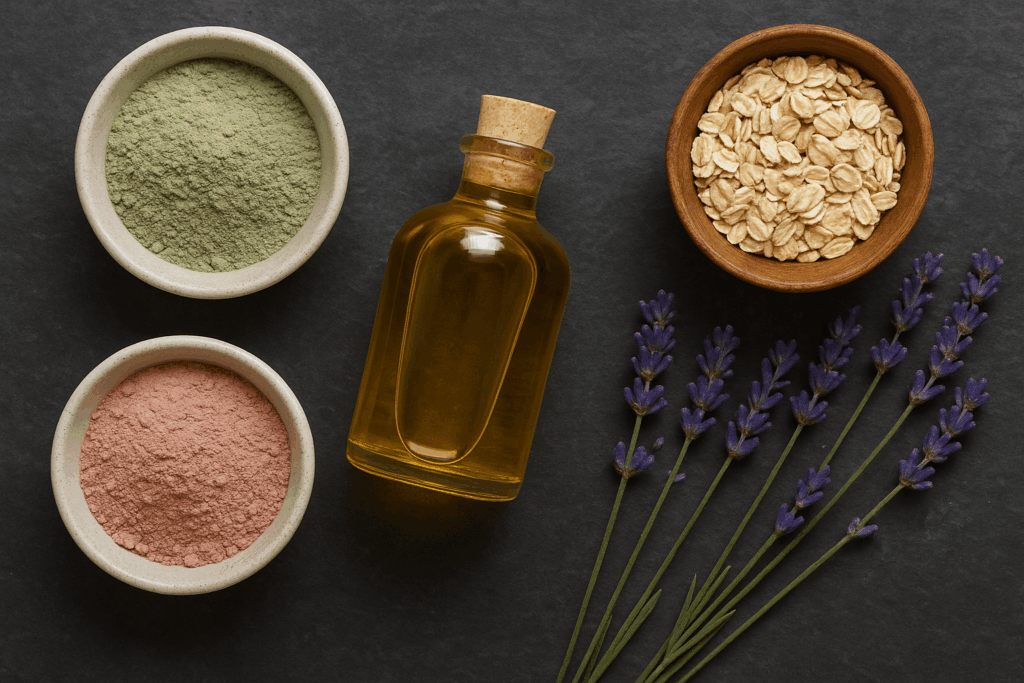
These are nutrient-rich oils extracted from seeds, nuts, and fruits. They are called “carrier” oils because they can be used to dilute more potent essential oils, but they are powerful moisturizers in their own right. They are fantastic for nourishing the skin and supporting a healthy barrier. We’ll explore them in more detail in our upcoming guide: The Top 5 Carrier Oils for a Healthy, Glowing Complexion.
Examples: Jojoba Oil, Rosehip Seed Oil, Squalane (from olives), Argan Oil.
2. Botanical Extracts
These are concentrated ingredients derived from plants, flowers, and herbs, known for their potent antioxidant and anti-inflammatory properties. They are often used in serums and treatments to target specific concerns.
Examples: Green Tea Extract (soothing, antioxidant), Chamomile (calming), Licorice Root (brightening), Calendula (healing).
3. Natural Butters
Thicker and richer than oils, natural butters are excellent emollients for dry skin. They are fantastic for creating a protective barrier that locks in moisture and prevents water loss.
Examples: Shea Butter, Cocoa Butter, Mango Butter.
4. Clays and Muds
Used for centuries in beauty rituals, clays are wonderful for detoxifying and purifying the skin. They work by absorbing excess oil and impurities from the pores, making them a great ingredient for masks.
Examples: Bentonite Clay (highly absorbent), Kaolin Clay (gentle, for sensitive skin), Rhassoul Clay (rich in minerals).
A Guide to Natural Skincare: DIY Recipes
One of the most empowering parts of a natural skincare journey is creating your own simple, fresh products. A DIY approach aligns perfectly with the philosophy of Skincare Minimalism, using just a few high-quality ingredients to create something effective.
A Simple, Soothing DIY Face Mask Recipe
This is a perfect beginner’s recipe for calming and hydrating all skin types. Learn more in our upcoming guide: How to Make a Simple, Soothing DIY Face Mask for Sensitive Skin.
- 1 Tablespoon of Plain, Full-Fat Yogurt: The lactic acid provides gentle exfoliation.
- 1 Teaspoon of Raw Honey: A natural humectant and antibacterial agent.
- 1 Teaspoon of Colloidal Oatmeal or Ground Oats: Incredibly soothing and anti-inflammatory.
Instructions: Mix all ingredients in a small bowl until you have a smooth paste. Apply to clean, dry skin and leave on for 10-15 minutes. Rinse with lukewarm water and follow with your favorite moisturizer.
Frequently Asked Questions (FAQs)
Q1: Is “natural” always better?
A: Not necessarily. The term “natural” is not regulated, so it’s important to focus on the specific ingredients. Also, some people can be allergic to natural ingredients (like certain essential oils). The key is to find what works for your unique skin.
Q2: What is the difference between “natural” and “organic” skincare?
A: “Natural” generally means the ingredients are derived from natural sources. “Organic” is a regulated term that means the ingredients were grown without the use of synthetic pesticides and fertilizers. Organic products are natural, but not all natural products are organic.
Q3: How long do DIY skincare products last?
A: Because they don’t contain preservatives, fresh DIY products (especially those with water or food ingredients like yogurt) have a very short shelf life. You should make them in small batches and store them in the refrigerator for no more than a few days.